01 / HONESTY
Face what happened
Understand the breach, ask necessary questions, and make room for truthful disclosure instead of repeated discoveries.
A Qur’an, Hadith, and psychology-based guide to healing hearts after betrayal, dishonesty, neglect, or emotional distance.
For couples seeking a clearer first step—not a promise that every relationship can or should be repaired.
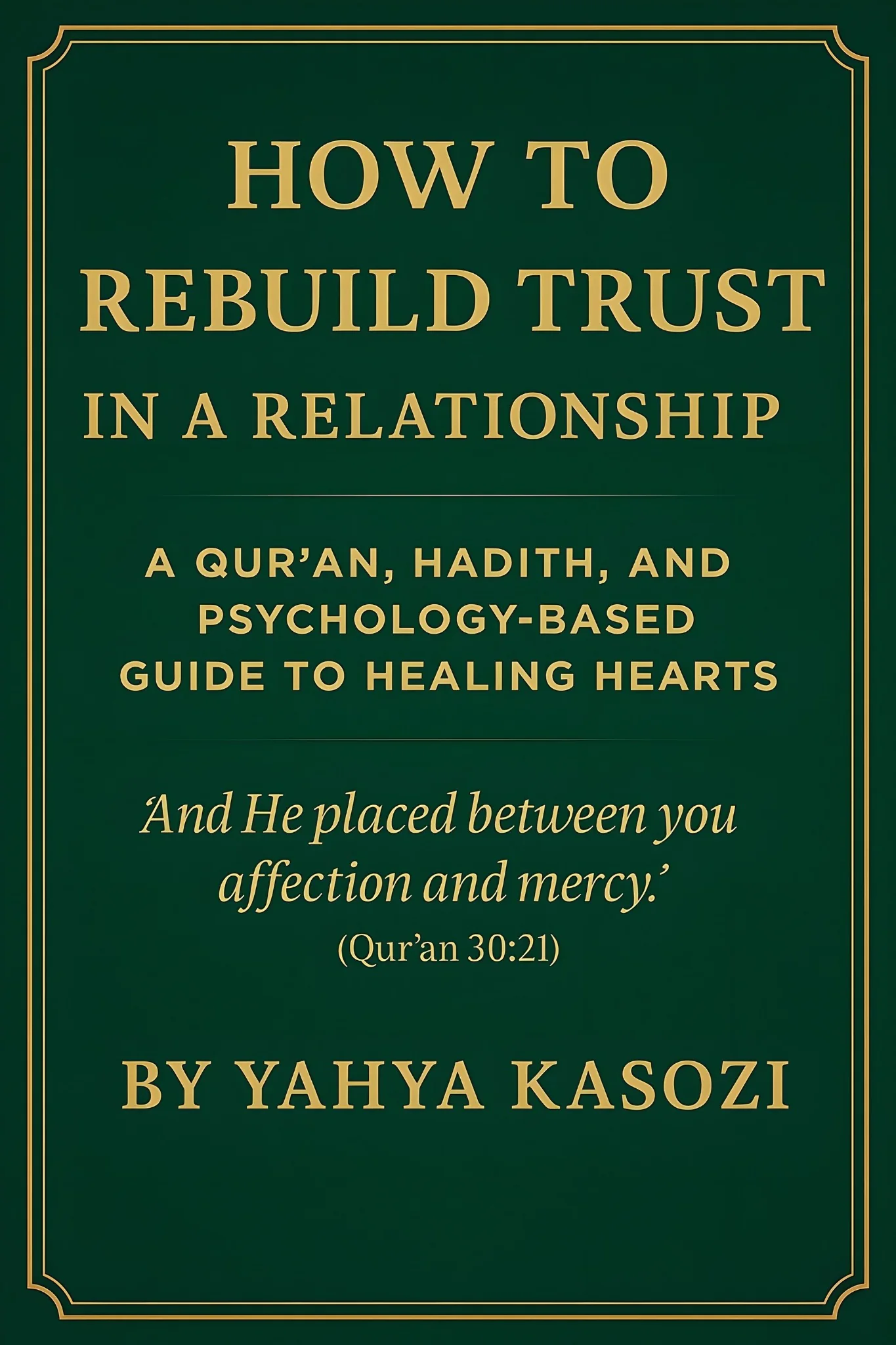
How to Rebuild Trust in a Relationship: A Qur’an, Hadith, and Psychology-Based Guide to Healing Hearts offers a practical framework for navigating damaged trust through honesty, mercy, boundaries, and consistent behavior.
Understand the breach, ask necessary questions, and make room for truthful disclosure instead of repeated discoveries.
Turn apology into specific commitments, emotional safety, and relevant transparency that can be reviewed over time.
Explore reconnection without forcing forgiveness or overlooking harm. Repair may be possible; sometimes distance or separation is the just path.
This short reflection suggests a first conversation based on the areas you select. It is not a diagnosis and does not decide whether you should stay or leave.
Trust repair is not one dramatic conversation. It is a sequence of truth, responsibility, stabilization, transparency, and reconnection—where safe and freely chosen.
If you are in danger, being threatened, or experiencing coercive control, prioritize safety and trusted local support rather than a joint exercise.
Download a concise guide with conversation prompts, a repair agreement worksheet, the Trust Bank Exercise, and a daily check-in ritual.
Address what happened without partial truths or blame-shifting.
Name the harm, accept responsibility, and do not demand immediate forgiveness.
Create boundaries and communication practices that reduce further harm.
Agree on relevant, proportionate actions that demonstrate honesty.
Rebuild through consistent daily actions and review commitments together.
PDF · printable worksheets · practical first steps
No email address is required to download it.
This optional form is configured for Netlify Forms. Email collection begins only after deployment and a successful test.
The book’s central approach is that trust cannot be restored by apology alone. Repair requires honesty about what happened, responsibility for the harm, emotional safety, consistent action, and patience with the injured person’s process.
It also recognizes that forgiveness and reconciliation are not the same, and that some situations call for support, distance, or separation rather than an attempt to preserve the relationship at any cost.
The full book explores communication, spiritual renewal, digital and financial boundaries, extended family, parenting after betrayal, seeking help, and when separation may be the just path.
Explore the full book on AmazonRelated reader tool
Explore the guided assessment connected to this topic, then return to the book for a fuller framework.
Take the Trust Repair Readiness Check →